The Chronicle of the Kurmi Samaj
From ancient Vedic agricultural guilds and medieval statecraft to the 19th-century educational renaissance and modern global leadership—explore the comprehensive narrative of our community.
Linguistic Etymology and Ancient Origins
The historic nomenclature of the Kurmi community carries profound linguistic, cultural, and socio-economic weight. Indologists and linguistic historians trace the primary root of the word Kurmi to Sanskrit derivations, most prominently "Krishi-karman" (कृषिकर्मन), signifying those dedicated to the noble act of cultivation, soil management, and agricultural production.
Alternative scholarly hypotheses reference the Sanskrit term "Kurma" (कूर्म)—symbolizing resilience, steadfastness, and protective grounding. In early Vedic and post-Vedic literature, agrarian landholders and village leaders were frequently designated as Kutumbin or Kutumbika (householders and land-tilling proprietors). Over centuries of linguistic evolution across the Gangetic plains, Central India, and Western Deccan, Kutumbin evolved into regional phonetic variations including Kunbi, Kurmi, Patel, Mahato, Verma, and Katiyar.
Ancient epigraphical records indicate that Kurmi communities were never merely laborers; they were self-governing land proprietors (Bhumidhars) who pioneered water harvest reservoirs, crop rotation techniques, and ecological soil conservation across the Indo-Gangetic basin, Narmada Valley, and Chota Nagpur plateau.
-
✓
Krishi-karman: Sanskrit term for agriculturalist and soil master.
-
✓
Kutumbin / Kutumbika: Vedic landowning householder in ancient texts.
-
✓
Regional Synonyms: Kunbi, Patel, Mahato, Gangwar, Sachan, Sainthwar.
Agrarian Mastery & Village Economy Stewardship
Historically, British colonial ethnographers—such as William Crooke, Herbert Hope Risley, and George Grierson—extensively documented the unparalleled agricultural expertise of the Kurmi community. They observed that Kurmis possessed an intricate, empirical knowledge of soil hydrology, seed selection, crop rotation, and organic fertilization that far surpassed contemporary agrarian practices.
This deep bond with the land transformed vast riverine ecosystems along the Ganges, Yamuna, Sone, and Narmada into prosperous agricultural hearths. Kurmi cultivators were celebrated for their industrious ethos, financial frugality, and community-driven irrigation systems (such as Ahar-Pyne water networks in Bihar and Jharkhand).
Beyond crop cultivation, the community laid the foundation of Gram Swaraj (autonomous village republics). Village councils overseen by Kurmi elders ensured equitable distribution of grain reserves during drought years, maintained communal seed banks, and fostered inter-caste economic harmony within rural economies.
"The Kurmi is the backbone of Indian agriculture. His knowledge of soil, seasons, and crops is inherited through centuries of quiet dedication to the land."
Medieval Era, Statecraft & Martial Valor
While agricultural mastery was their primary economic foundation, Kurmi lineages played crucial administrative, military, and statecraft roles during the medieval period. In Western India, the Kunbi agrarian-warrior class formed the backbone of the Maratha military forces under Chhatrapati Shivaji Maharaj. Shivaji's military strategy relied heavily on the endurance, terrain knowledge, and fierce independence of Kunbi foot-soldiers (Mavalas) and cavalry commanders.
In Central and Northern India, several regional principalities, landlordships (Zamindaris), and fort-cities were administered by Kurmi chieftains. Regional titles such as Choudhary, Patel, Mahto, and Singh were formally bestowed upon Kurmi leaders by imperial court decrees in recognition of their capability in revenue collection, regional governance, and defensive militia organization.
Dual Identity: The Farmer-Soldier Synthesis
Throughout medieval conflicts, Kurmi men maintained a dual identity: tilling fields during peacetime and taking up arms to defend their ancestral lands and sovereignty during invasions. This dual tradition fostered a culture of self-respect, physical fortitude, and collective solidarity.
The 19th Century Renaissance & Kurmi Sabhas
How an awakening of education, social reform, and organizational unity transformed the community during colonial rule.
The late 19th century witnessed a socio-cultural awakening across British India. As colonial land policies (Zamindari and Ryotwari systems) imposed heavy tax burdens on agrarian communities, Kurmi visionaries recognized that social advancement required formal organization, modern education, and legal empowerment.
In 1894, the landmark Sardar Kurmi Sabha was established in Lucknow, bringing together community leaders across Uttar Pradesh, Bihar, and Central Provinces. This was soon followed by the establishment of the All India Kurmi Kshatriya Sabha in 1910, one of India's earliest organized social reform federations.
The Sabha movement spearheaded progressive reforms:
- ▪ Educational Trust Funds: Building hostels, primary schools, and scholarship pools for underprivileged youth.
- ▪ Abolition of Extravagance: Eradicating expensive wedding rituals, dowry practices, and superstitious customs.
- ▪ Women's Literacy: Championing female education and rights within rural families long before national policy mandates.
- ▪ Community Journals: Launching publications such as Kurmi Samachar to distribute news, scientific tilling methods, and literary essays.
Freedom Struggle & The Legacy of Sardar Patel
During the Indian Independence Movement, the Kurmi community emerged as a bedrock of peasant resistance against colonial oppression. Key historical agrarian protests—such as the Bardoli Satyagraha (1928), Kheda Agitation, and peasant revolts across Bihar and Awadh—were spearheaded by Kurmi and Patel farmers who refused to pay unjust colonial tax surcharges.
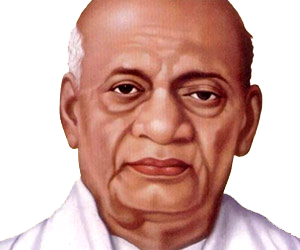
Sardar Vallabhbhai Patel (1875–1950)
The "Iron Man of India" and India's first Deputy Prime Minister belonged to the Patidar-Kurmi lineage. His decisive leadership integrated 565 princely states into a unified Indian Republic, symbolizing the peak of national statesmanship, courage, and political foresight.
Architect of Modern Unified IndiaBeyond Sardar Patel, thousands of unheralded Kurmi freedom fighters sacrificed their lives, endured imprisonment, and supported Underground revolutionary networks across UP, Bihar, Gujarat, Maharashtra, Madhya Pradesh, and Odisha.
Milestones Through Millennia
A chronological timeline charting major historical turning points of the Kurmi Samaj.
Vedic Kutumbin Era
Formal recognition of agricultural tilling communities and village landholders in early texts.
Maratha Kunbi Valor
Kunbi warriors form the backbone of Chhatrapati Shivaji Maharaj's army and revenue administration.
Sardar Kurmi Sabha Lucknow
First organized formal social body established to champion education and eradicate social evils.
All India Kurmi Kshatriya Sabha
National federation established, unifying sub-groups across UP, Bihar, MP, and Gujarat.
Bardoli Satyagraha & Independence
Sardar Patel leads peasant movements; Kurmi youth actively participate in anti-colonial struggles.
Global Diaspora & Tech Empowerment
Expansion into global software, medicine, governance, entrepreneurship, and digital heritage portals like Ekurmi.com.
Regional Names & Lineages Across India
The Kurmi Samaj encompasses diverse regional titles linked by shared heritage.
Gujarat & Maharashtra
Represented by Patel, Patidar, and Kunbi lineages—pioneers of dairy co-operatives and industrial entrepreneurship.
Uttar Pradesh & Awadh
Prominently known as Verma, Katiyar, Gangwar, Sachan, and Sainthwar across central and eastern districts.
Bihar & Jharkhand
Known as Mahato, Mandal, and Choudhary—leading political reform and agrarian productivity.
Madhya Pradesh & Chhattisgarh
Identified as Chandrakar, Patel, and Kurmi—stewards of fertile paddy belts and rural banks.
Odisha & Bengal
Recognized as Kudumi Mahata—preserving rich folk traditions like the Chhau dance and harvest festivals.
Global Diaspora
Vibrant diaspora communities across the USA, UK, Canada, Gulf, Australia, and South Africa contributing to science & tech.
Frequently Asked Historical Questions
What is the origin of the name 'Kurmi'? ▼
The word 'Kurmi' originates primarily from the Sanskrit terms Krishi-karman (agricultural tilling practitioner) and Vedic Kutumbin (landed householder). It reflects a historical heritage of land ownership, environmental stewardship, and community leadership.
Are Patels and Kunbis part of the Kurmi community family? ▼
Yes. Anthropological, historical, and genealogical studies confirm that Patels (Patidars) of Gujarat and Kunbis of Maharashtra share direct historical, etymological, and social lineage with the Kurmis of Northern, Central, and Eastern India.
When did the modern organizational movement begin for the Kurmi Samaj? ▼
The modern organized movement began with the founding of the Sardar Kurmi Sabha in Lucknow in 1894, followed by the landmark All India Kurmi Kshatriya Sabha in 1910, which championed education, female literacy, and social reform.
Contribute to Our History Archive
Have historical documents, regional manuscripts, or genealogical records? Join our academic research team in preserving Kurmi heritage for future generations.
About Kurmi Community History & Heritage
Understanding Kurmi community history requires attention to regional traditions, historical records and the changing social context of Kurmi communities. This section provides an accessible starting point for learning about Kurmi heritage, cultural continuity and community identity without reducing a diverse history to a single regional narrative.
Explore More Kurmi Community Resources
Continue exploring Kurmi community resources through the Kurmi history, notable personalities, community news, community events, photo gallery, community directory and Kurmi matrimonial sections. You can also join eKurmi to participate in the community platform.
Frequently Asked Questions
What is the history of the Kurmi community?
The Kurmi community has a long and diverse history across regions of the Indian subcontinent. Regional traditions and historical records differ, so responsible study should consider documented sources and local context.
Why is Kurmi heritage important?
Kurmi heritage includes community traditions, social institutions, regional customs, agricultural knowledge and cultural practices that can be preserved for future generations.
Where can I explore more Kurmi heritage?
Visit the personalities, news, events and gallery sections to explore additional community stories and cultural resources.